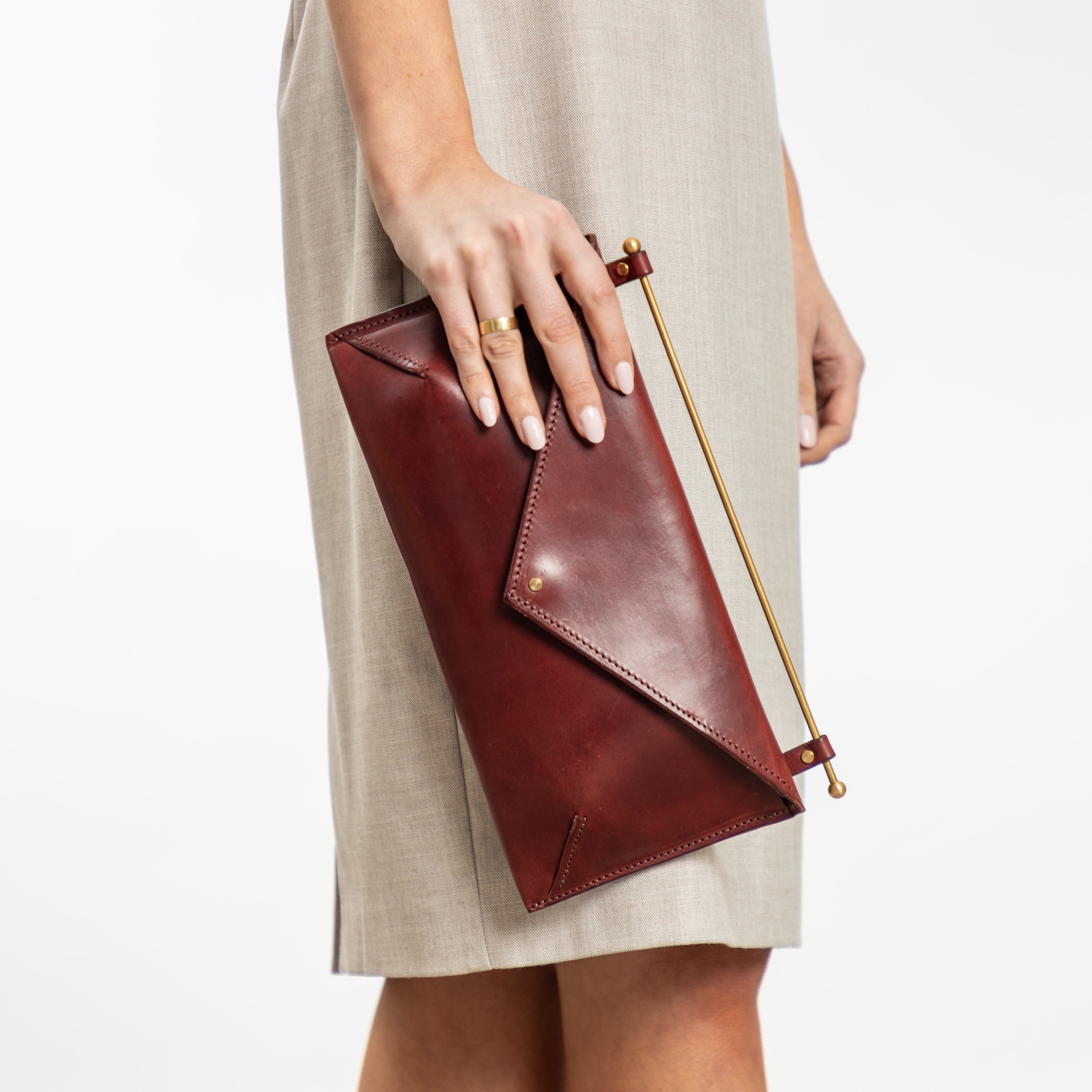
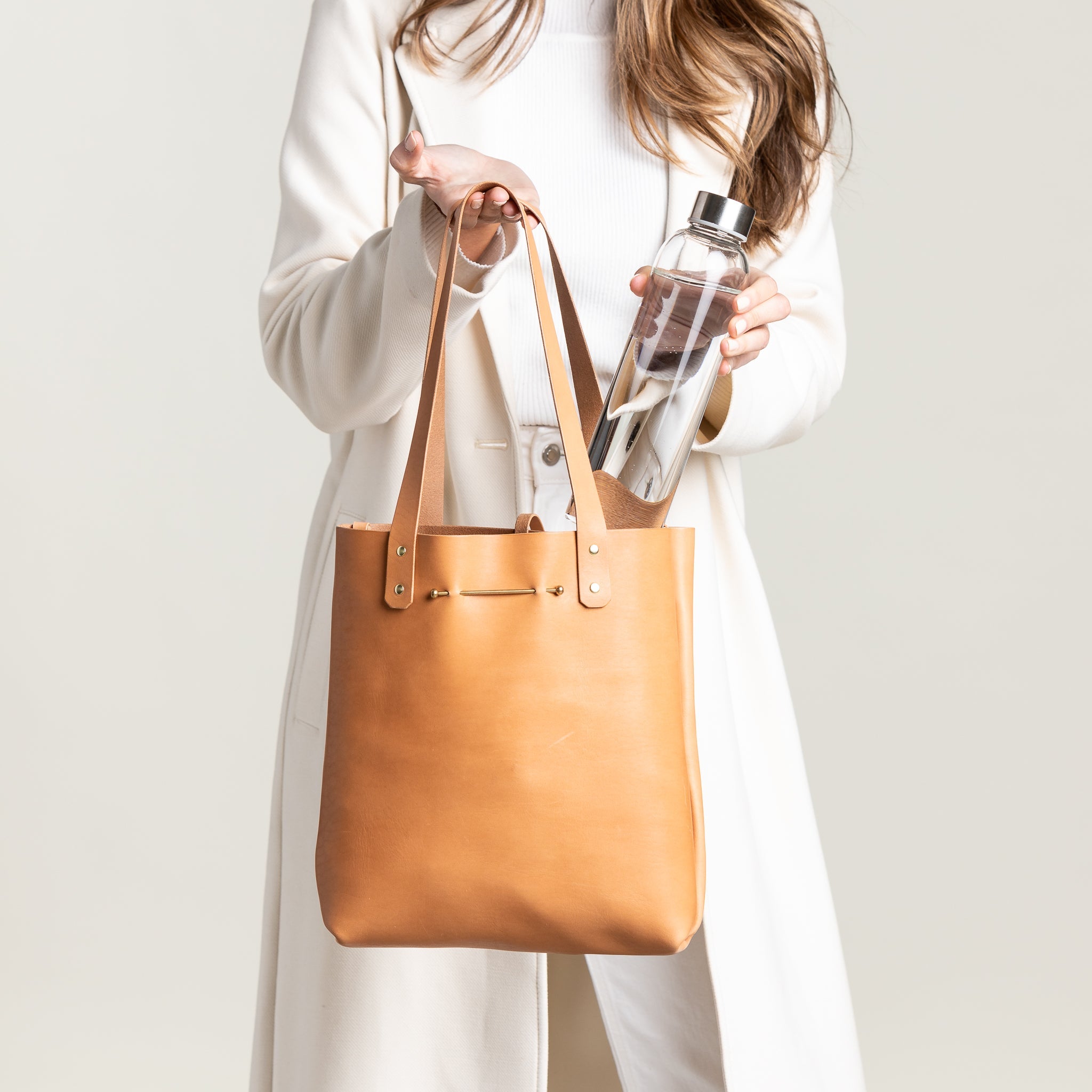
How to Spot a High-Quality Leather Bag
Logo and price aren't a foolproof way to find a high-quality leather bag. Here’s what to look for.
Quick Quality Checklist
- ✓ Is it made from full-grain leather?
- ✓ Is it made from vegetable-tanned leather?
- ✓ Are the edges cleanly burnished or finished?
- ✓ Does the hardware feel solid and durable?
- ✓ Is the lining made from leather?
- ✓ Does the leather smell good and show subtle grain and texture?
- ✓ Are the stitches straight and evenly spaced?
- ✓ Are handles and straps reinforced?
- ✓ Is it likely to develop a beautiful patina?
Let's look at each more closely:
1. Full-Grain Leather
The leather itself is the biggest indicator of quality.
- The best: Full-grain leather is the highest quality. It is the outermost layer of leather, and the strongest. It retains the natural grain, develops a rich patina over time, and can last for decades.
- The next best: Top-grain leather is second-best. It's made by slicing a raw hide into layers and sanding down the outer surface to smooth out any natural marks, resulting in a more uniform appearance.
- The rest: Genuine leather: Avoid bags labeled simply as "genuine leather" with no other details. While technically real leather, this term often refers to lower-quality leather made from the weaker lower layers of the hide.

2. Vegetable Tanned Leather
Vegetable tanned leather is a good indication of quality.
- The best: Vegetable tanned leather: Veg tanning is a more sustainable and also more expensive tanning method than chrome-tanning. It develops a rich patina and has that iconic leather smell.
- The next best: Chrome tanned leather: Quick and effective but often uses toxic chromium salts. If it doesn't explicitly say vegetable tanned leather, it's probably chrome tanned.
- The rest: Vegan leather: unless it's labeled as bio-based vegan leather (more on that in a future post), vegan leather is a fancy way to say plastic.
While cost doesn't always map to quality, if a maker is willing to use veg tan (that is, materials that are costlier and harder to source), there's a good chance that the maker cares about quality.
3. Burnished / Finished Edges
Raw leather edges should be properly finished. If a bag has raw edges, it's probably not high quality.
- The best: Burnished edges: The highest quality bags feature rounded and burnished edges. The sharp 90 degree cut edge is beveled away, and then the leather fibers are fused using wax and friction heat, creating a smooth and glossy edge.
- Also the best: Folded edges: Leather is thinned and folded back on itself to create a smooth edge.
- The next best: Painted edges: A step down in quality, but still possibly good, this bag will have edge paint applied smoothly and evenly, with multiple coats on exposed edges.
- The rest: Unfinished, cracked, or peeling edges indicate low-quality construction.
A burnished or folded edge will hold up better over time than a painted edge. Painted edges are only as good as the bond between the paint and the leather, which can break down over time.
A burnished edge is only possible on high quality vegetable tanned leather. Lower quality leathers don't have the dense fiber structure required for burnishing, so they are often painted instead.

4. Solid Hardware
Hardware should feel substantial. Look for smooth zippers and secure rivets and clasps
- The best: Solid brass, stainless steel, or PVD coated hardware.
- The next best: Plated hardware that resists tarnishing.
-
The rest: Flimsy hardware of unspecified metal.

5. Quality Lining
The inside matters just as much as the outside.
- The best: Full grain leather. Even when split down to a thin layer, full grain leather retains its strongest top grain, resulting in a lining that is strong, wears beautifully, and easily wipes clean.
- The next best: Nubuck, suede, or "sanded" leather.
- The rest: Fabrics like cotton or microfiber that can rip and stain.

6. Grain and Texture
The best leather should have subtle variations.
- The best: Slight differences in grain pattern, rich color, that delicious leather smell
- The next best: More uniform or corrected surface
- The rest: Plasticky coatings and perfectly identical textures across the entire bag suggest heavily corrected or synthetic materials.
7. Strong, Even Stitching
Quality stitching is one of the easiest things to inspect.
Signs of excellent craftsmanship include:
- Straight stitch lines
- Even stitch length
- Tight, uniform tension
- Reinforced stress points
- No loose threads

8. Comfortable Handles and Straps
The handles should feel durable and comfortable.
Look for:
- Multiple layers of leather
- Reinforced attachment points
- Finished edges
- Comfortable thickness
- Minimal stretching under normal weight
9. Ages Beautifully
Perhaps the greatest hallmark of premium leather is how it improves with use.
High-quality leather:
- Develops a rich patina
- Becomes softer without becoming weak
- Shows character instead of simply wearing out
- Can often be conditioned, repaired, and restored
Lower-quality leather often cracks, peels, or delaminates rather than aging gracefully.
The bottom line
When judging a leather bag, look at the whole system. Material, stitching, edges, hardware, and pattern should support one another. Pay closest attention to the parts you will touch every day. The best leather bags aren't defined by a luxury logo.