Full-Grain Leather vs. Genuine Leather: What's the Difference?
Leather terminology can be confusing. “Genuine leather” sounds reassuring. “Full-grain” sounds technical. Yet the difference between them can tell you a lot about the quality of a bag and how it'll look in a few years.
Full-Grain Leather
Full-grain leather keeps the outer grain of the hide intact. The outer grain is the original surface and the strongest part of the hide.
If you look closely, you'll see that the surface of full-grain leather will not be perfectly identical from one area to the next. You might see pores, natural marks, or a change in the grain pattern. Remember, leather used to be an animal's skin. Just like our skin isn't perfectly uniform, full-grain leather has variations within the same piece.
Full-grain leather wears beautifully over time. It softens where it is handled. Light can deepen the color. Depending on how it was dyed and finished, areas of stress might lighten as waxes and oils migrate from folds.

Genuine Leather
Genuine leather is real leather. Beyond that, the term tells you confusingly little.
It can describe leather from beneath the grain layer. It can be leather that has been corrected (sanded) and finished to create a more uniform surface. Really, it could mean anything because it doesn't have an agreed upon definition. Technically, genuine leather could be full-grain leather...but quality leatherworkers will use the term "full-grain" so there is no question.
Often "genuine leather" is a catch-all term to include lesser-quality leathers.
The Difference Shows Up Later
On a new bag, it might be hard to tell the difference. After years of use, it becomes more obvious.
Full-grain leather tends to record the way it has been carried. A handle darkens. A flap becomes smoother. The color gains depth. Heavily finished leather is generally intended to resist that kind of visible change, and if it does visibly change, it is often left looking shabbier.
Of course, leather alone does not make a good bag. A beautiful hide cannot rescue poor stitching or a weak strap attachment. Design and construction matters.
At PERSISTENCE

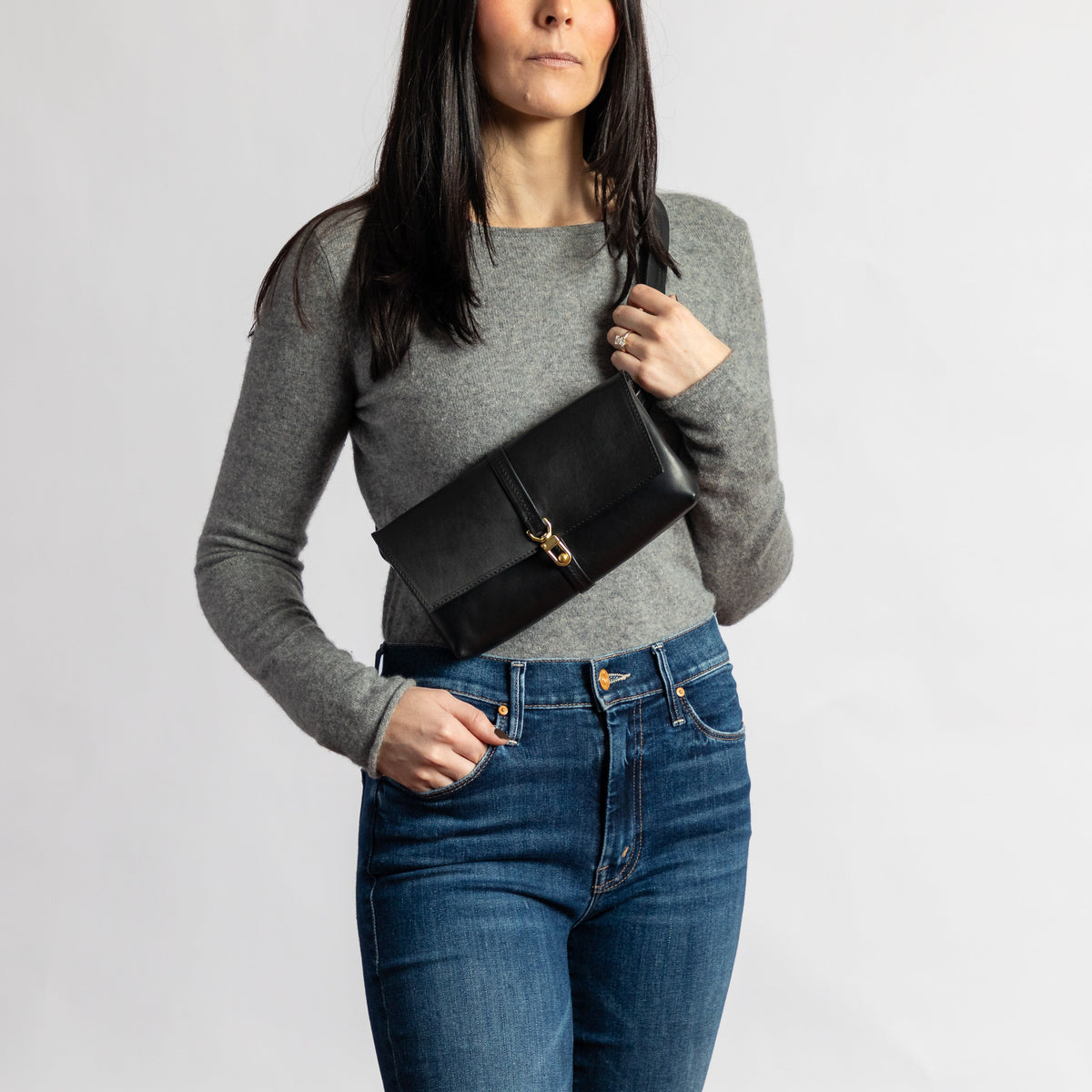
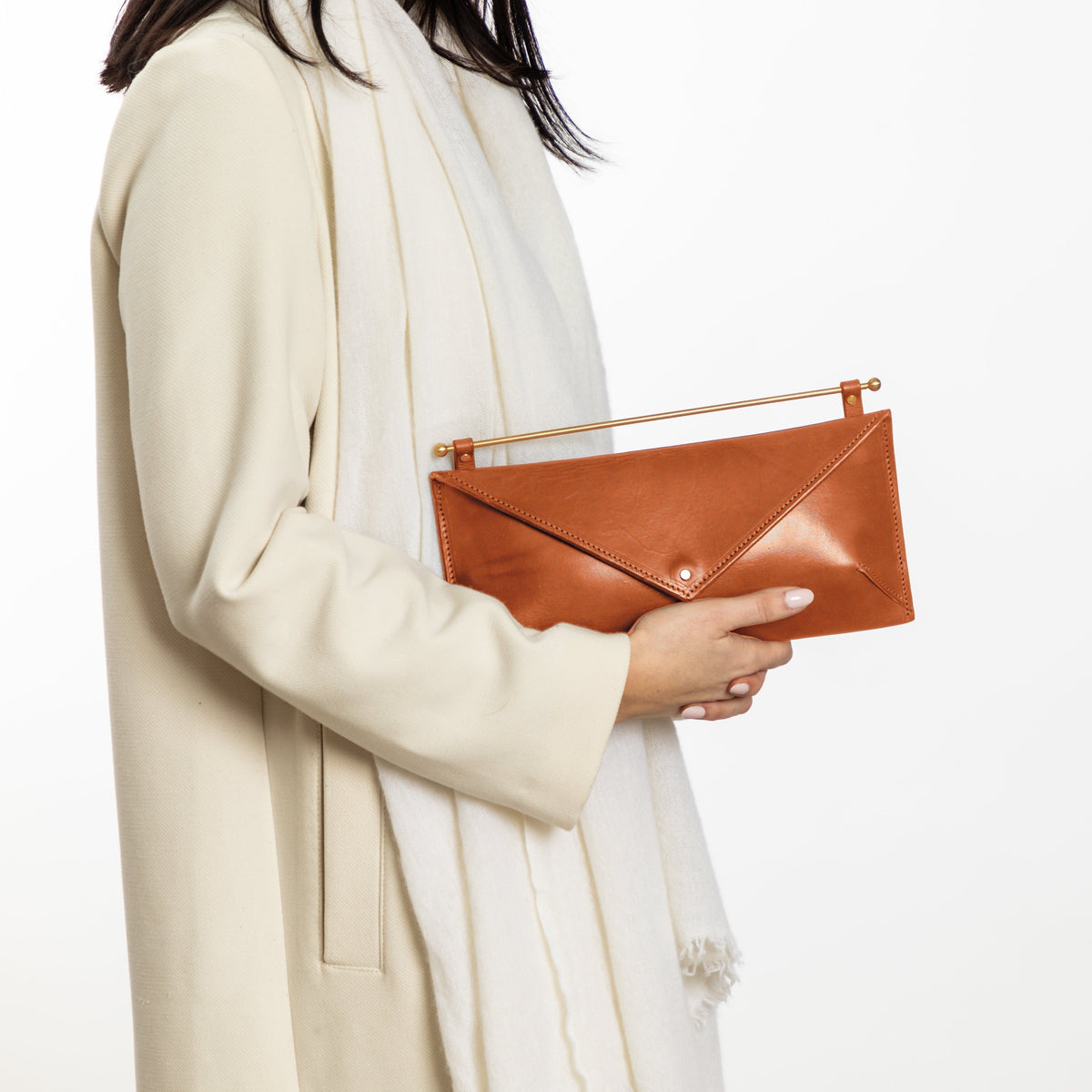
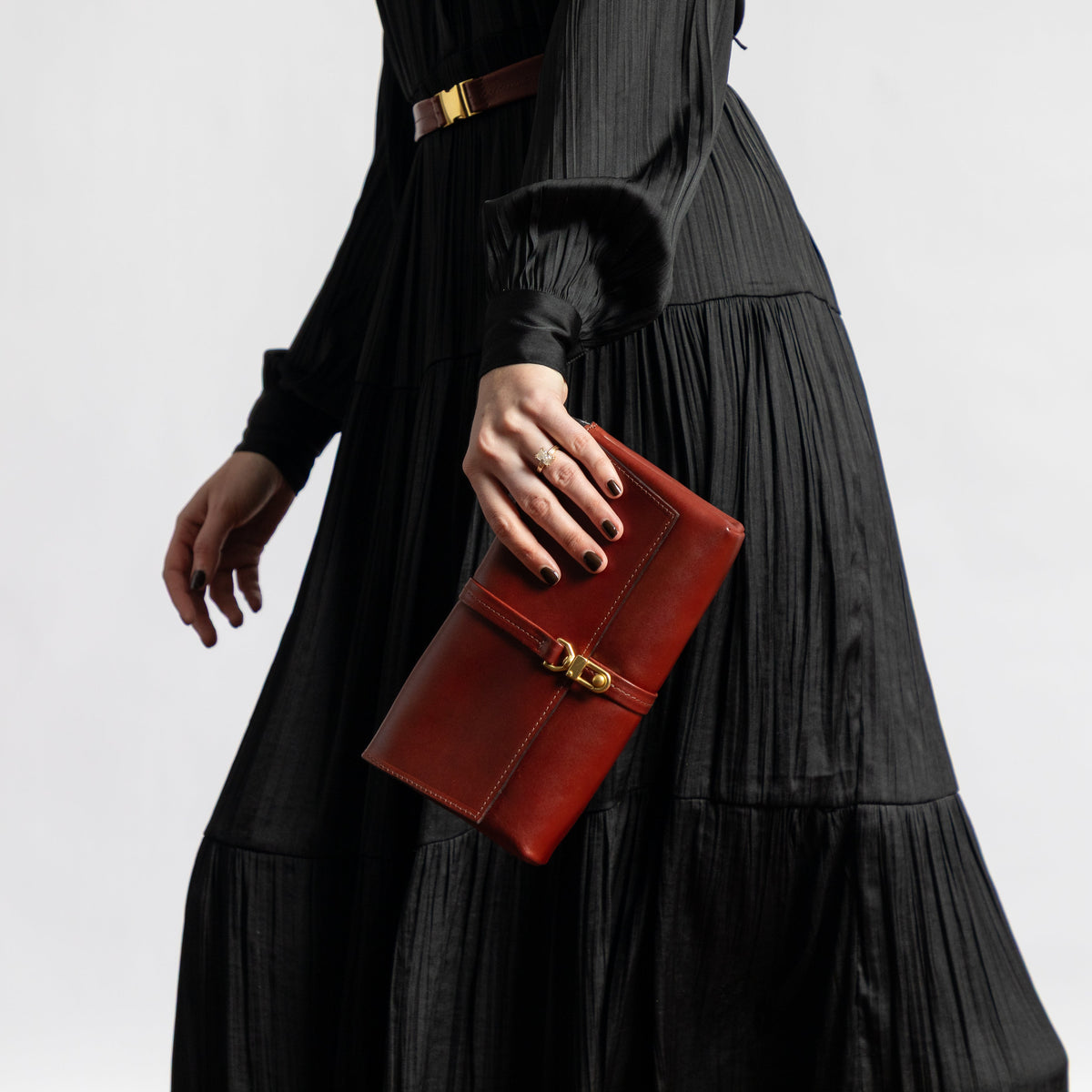
We use full-grain vegetable-tanned leather because we like what it becomes after the bag leaves our studio.
The Transpose Bag is built around leather that is allowed to look like leather. We choose each section of a hide with the finished product in mind, carefully placing each pattern piece to use the strongest and most beautiful parts of the hide.
If you are comparing leather bags, ask two simple questions: what leather is this, and how has the surface been finished? The answers are usually more useful than the label.