What is Vegetable-Tanned Leather?
What is vegetable tanned leather?
Vegetable tanning uses natural tannins found in tree bark and other plants to preserve the hide, as opposed to toxic heavy chromium salts that are used in the more common method of chrome tanning. Vegetable tanning is costlier and takes longer than chrome tanning, but it is a more natural and sustainable process.
About 10% of world leather production is vegetable tanned because of the cost, time, and craftsmanship required. If a leather item doesn't explicitly say that it is vegetable tanned (or veg tan), it probably is chrome tanned.
What Vegetable Tanning Changes
Vegetable tanned leather changes as it is carried. It darkens in some places, softens in others, and slowly loses the pristine look it had on the cutting table. You can see the life of the bag.
The first year of regular use can be the most noticeable. Corners may become less rigid. Sunlight may warm or darken the color. Creases and folds may form in areas of stress.
None of this happens on a schedule, and a bag carried to work every day will not age like one brought out twice a month. Two bags cut from the same hide can patina in different ways, based on how they are used.
Patina Is Not Damage
This is where people sometimes get nervous. A scratch appears and the instinct is to fix it immediately.
Often, it is worth waiting.
A light surface mark may soften with handling and eventually disappear into the larger patina of the bag. Dry cracking, torn leather, or failed stitching are different. Those are problems. A change in the surface is not necessarily a problem.

At PERSISTENCE
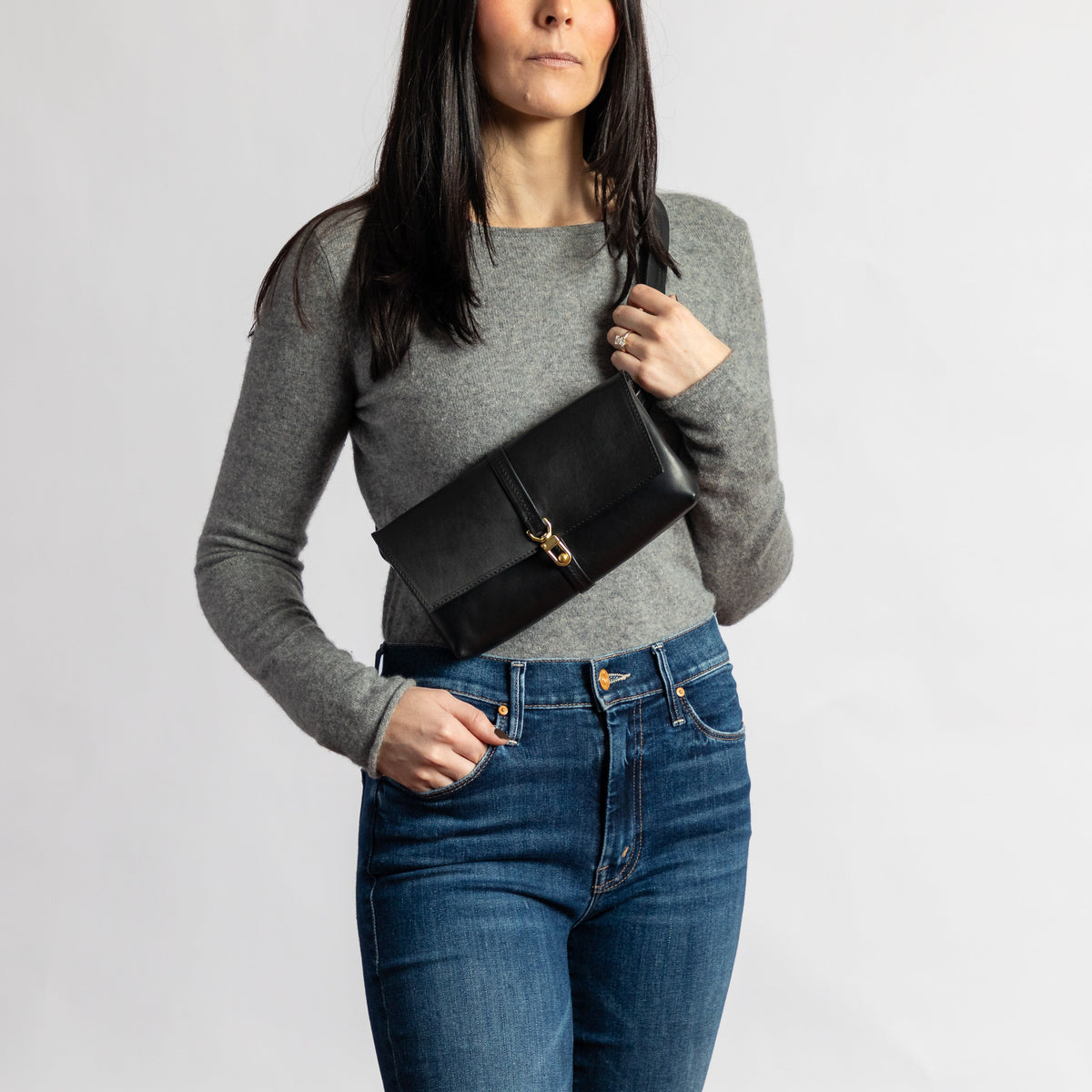
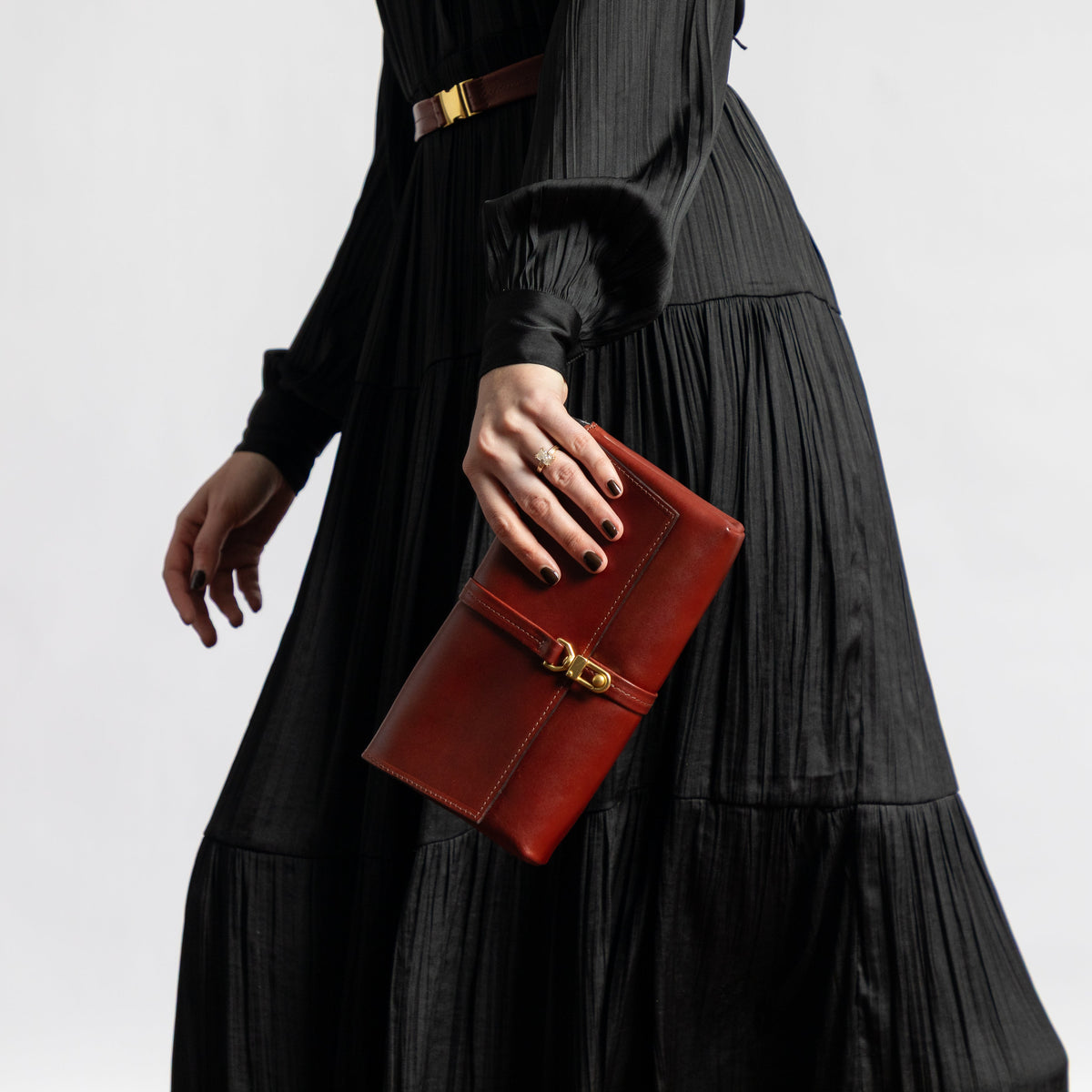
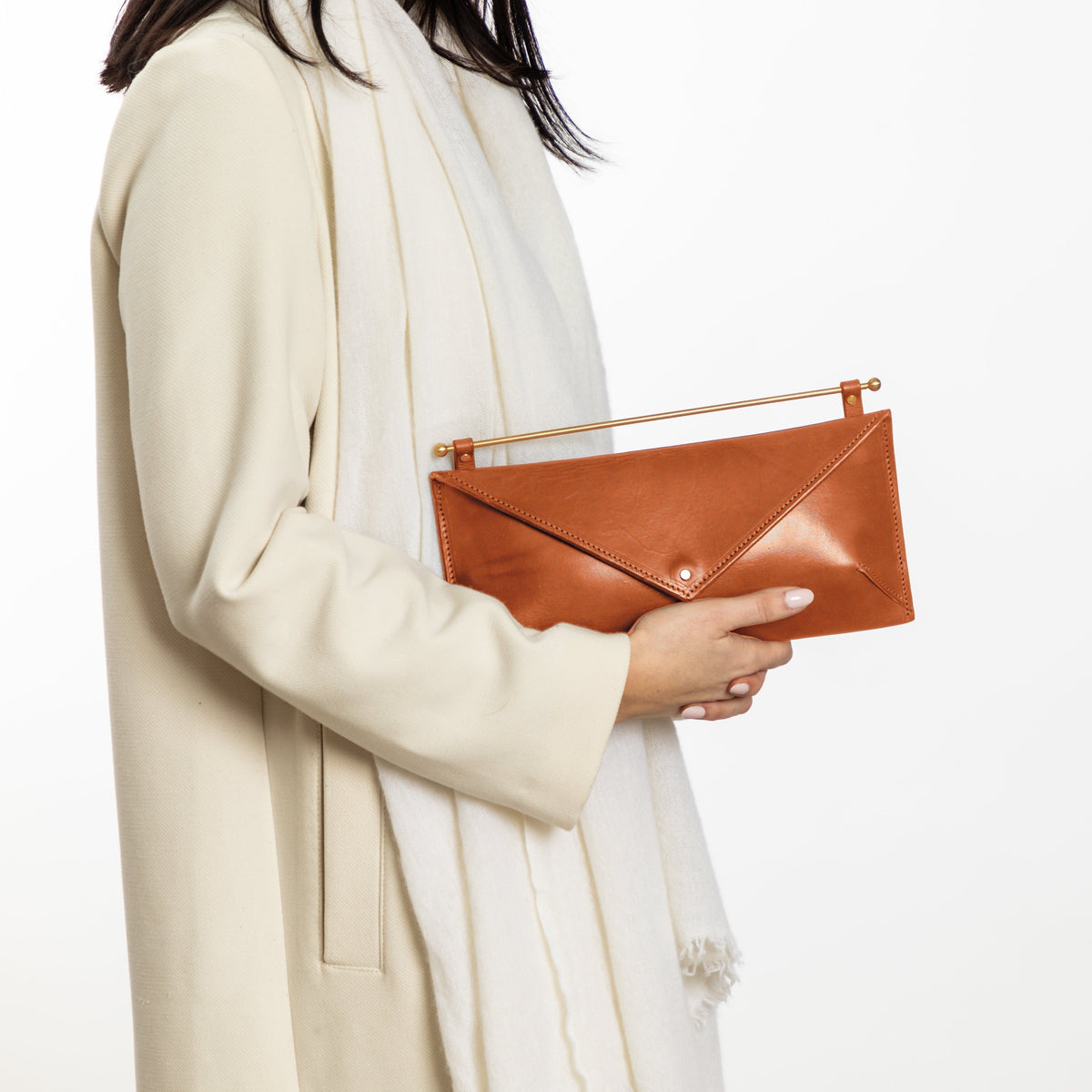
We use full-grain vegetable-tanned leather for our leather goods. Our Transpose Bag pairs smooth dyed vachetta from Conceria Tempesti in Tuscany with a full-grain vegetable-tanned leather lining from Wickett & Craig in Pennsylvania. All of our leather comes from reputable tanneries, and we can trace each piece back to its tannery.
We choose these leathers because they do not stay frozen in time. A new PERSISTENCE bag shows our work. An older one shows yours, too.
You don't need to manufacture patina. Carry the bag. Let it age at its own pace. Keep it away from prolonged moisture and direct heat, and reach for conditioner only when the leather actually feels dry (it's probably not as often as you think).