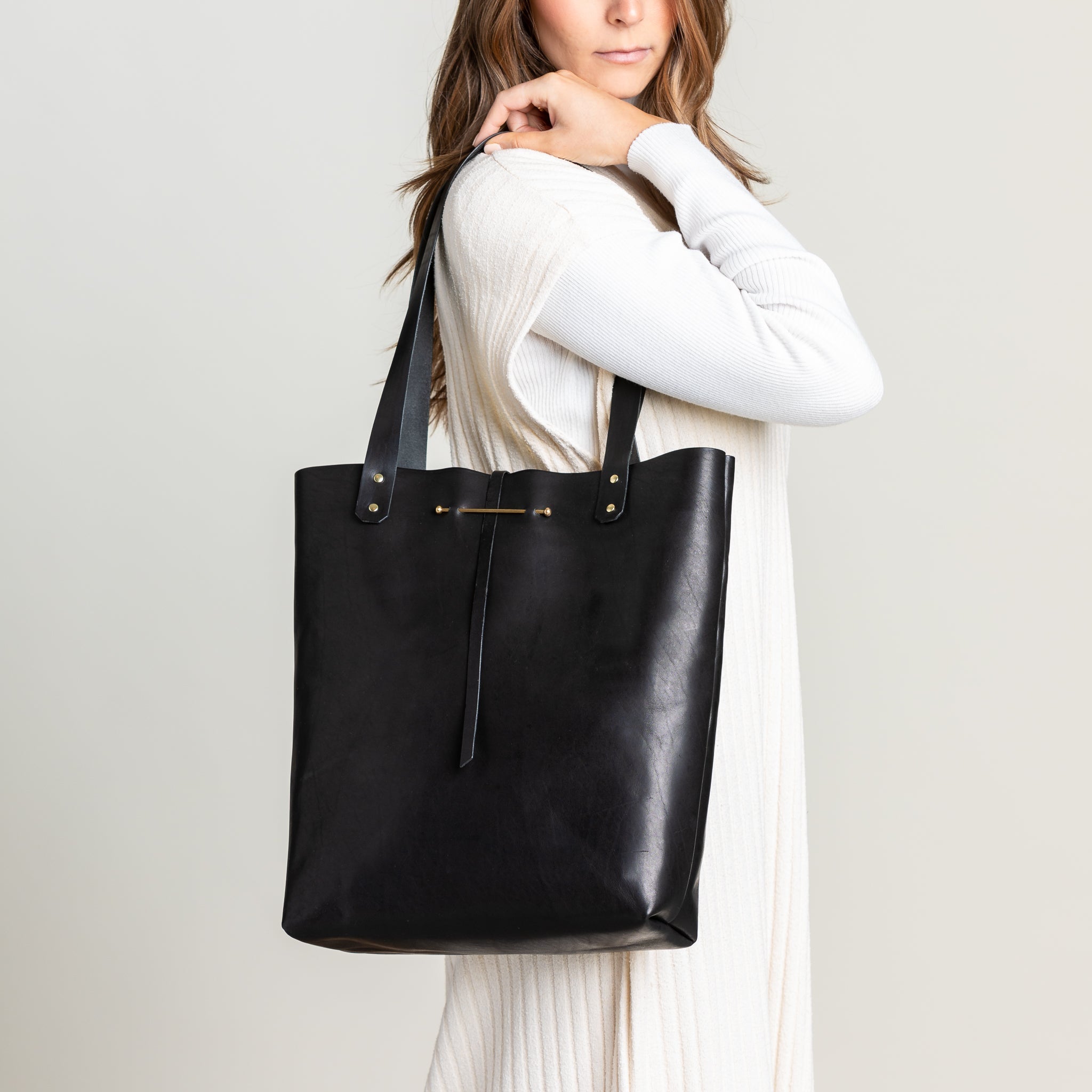
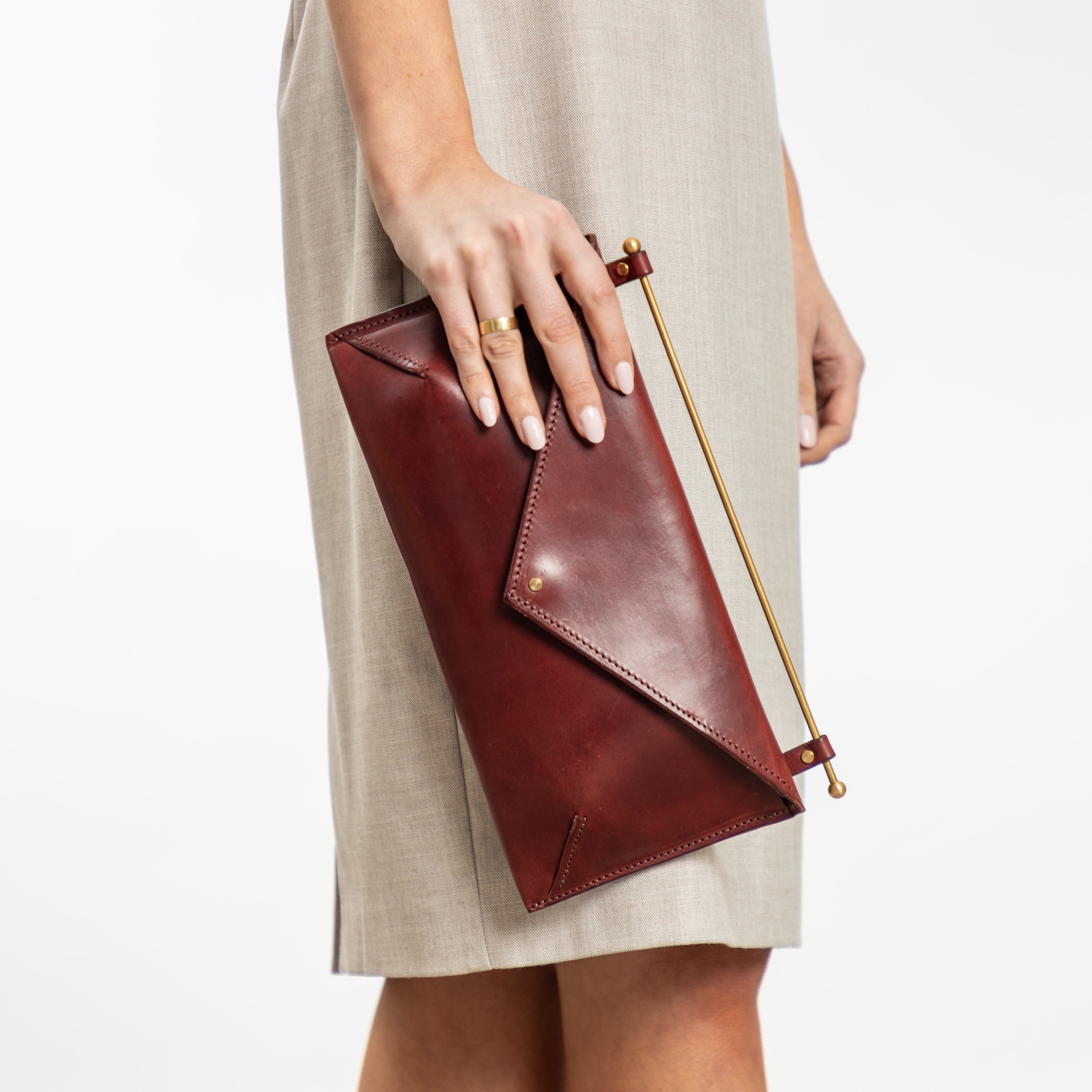
Small-Batch vs. Mass-Produced Leather Goods: What's the Difference?
The difference between handmade small-batch leather goods and mass-produced leather goods isn't whether a machine was involved (it usually is.) The difference is the production system and the decisions that system allows. How much control does the maker have over every step of the process?

Mass Production Prioritizes Consistency
Mass-produced leather goods are designed for efficiency and repeatability. Standardized processes allow the same product to be made thousands of times.
That approach can produce excellent leather bags, but it doesn't leave room to incorporate the unique character of each hide. To achieve a uniform appearance, many mass-produced products use heavily corrected or coated leather.
Small-Batch Production Prioritizes Quality
Small-batch production allows makers to work with the leather. A strap can be cut from a stronger section of the hide, a panel can be recut if the grain isn't quite right, and each piece can be fine-tuned throughout production.
These small decisions are difficult to standardize, but they make a noticeable difference in the finished product.
Why Choose Small-Batch Leather Goods?
Better Craftsmanship: Producing leather goods in small batches allows for greater attention to detail, resulting in cleaner construction and higher overall quality.
Supporting Skilled Artisans: Small-batch production values craftsmanship over speed. It helps create skilled jobs where artisans are fairly compensated for their expertise and the quality of their work.
Responsible Production: Making leather goods in smaller quantities reduces excess inventory and material waste. Instead of producing thousands of identical products, small-batch makers create only what they can produce with care and quality.

At PERSISTENCE
Every PERSISTENCE leather bag is designed and produced in-house, giving us the flexibility to make decisions that improve the finished product—from selecting the best section of the hide to inspecting every bag before it leaves the workshop.
Rather than asking whether a leather bag is handmade, ask how much control the maker has over material selection, construction, finishing, and quality inspection. Those details say far more about the quality of the bag than any logo.